
Summary of the Weather & Climate Forecast Conference (WCFC) 2026 June
1. Background and Central Theme of the Conference
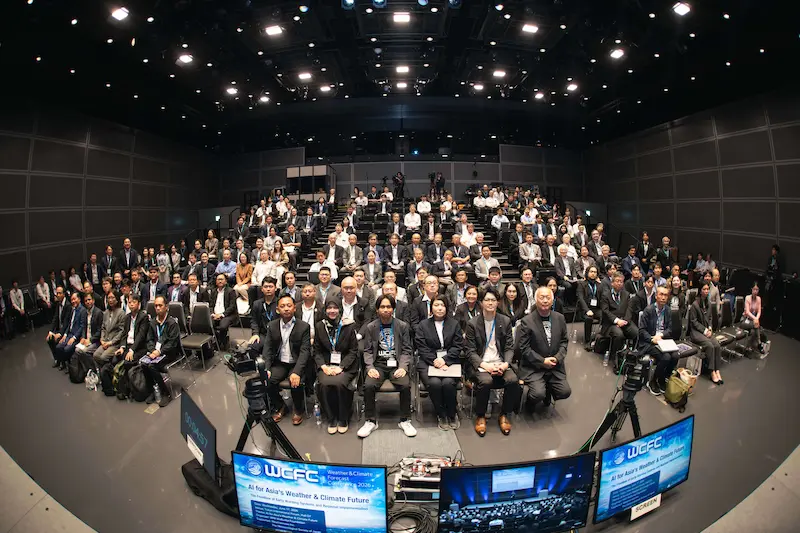
At the 2nd Weather & Climate Forecast Conference (WCFC) held in June 2026, the focus of discussion broadened beyond pure technology to encompass wider societal concerns. In the face of intensifying meteorological disasters driven by climate change, the central theme explored how to apply rapidly evolving AI technologies to the real world, linking them to concrete disaster risk reduction actions and effectively bridging the gap from early warning to early action.


2. The Paradigm Shift Brought by AI
AI is expected to catalyze human decision-making and action, including proactive evacuation, by enabling highly accurate forecasting and seamless information sharing across language barriers. Moving beyond a simple forecasting tool, AI is beginning to act as a hub, a kind of central nervous system, that translates scientific data into concrete disaster prevention actions.

3. Implementation Status and Impact-Based Forecasting in Asia
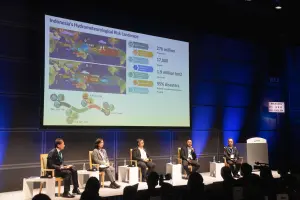
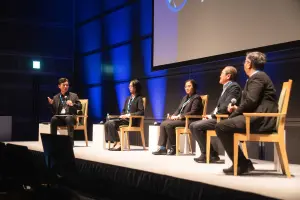
National meteorological agencies in countries such as Indonesia, Nepal, the Philippines, Thailand, and Vietnam are accelerating AI implementation to address challenges posed by complex terrain and increasingly severe disasters, such as the rapid intensification of typhoons. Many of these nations are urgently shifting toward impact-based forecasting, focusing not just on what the weather will be, but on what the weather will do.

4. Common Challenges and Barriers
The conference also highlighted common challenges in deploying and operating AI across the Asian region:
- Data and Infrastructure: There is an urgent need to overcome the shortage of high-quality historical data required for training AI models, as well as to expand the coverage and density of observation networks.
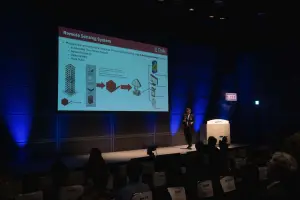
- Resource and Talent Shortages: Securing the computational power to run advanced AI models is essential, as is cultivating interdisciplinary professionals who bridge AI expertise and meteorological knowledge.
5. Conclusion: The Convergence of Technology and Community
While practical applications are progressing, such as smartphone-enabled real-time disaster detection and wildfire prediction, the overarching consensus reached at the conference was that AI is not an omnipotent solution, but merely a tool designed to support a human-centric society.
No matter how sophisticated an early warning system may be, it is ultimately the citizens, the recipients of these warnings, who must take action to protect lives. Therefore, the conference concluded that in parallel with technological advancements, it is absolutely essential to enhance civic literacy and cultivate community resilience rooted in self-help and mutual assistance.


Presentation Video
※ Please note that some session recordings may not be available in the archive at the speaker's request. Thank you for your understanding. View the Archive Playlist
Presentation Materials
- Opening RemarksJiro MiyabeRepresentative Director, WNI Wx Bunka Foundation
- Empowering Citizens for Climate Resilience: The Emerging Role of AI in AdaptationYuichiro NishiTechnical Director, Weathernews Inc.
- Connecting Early Warning to Early ActionMami MizutoriSpecially Appointed Professor / Strategic Management Advisor, Tohoku University / Former Special Representative of the UN Secretary-General for Disaster Risk Reduction / Former Head of UNDRR
- NVIDIA Earth-2 Developments and DirectionsStan PoseyProgram Manager, Earth System Science Domain, NVIDIA
- The Agency for Meteorology Climatology and Geophysics of The Republic of Indonesia (BMKG)Yoshua Ade NugrohoProject Management Officer, BMKG
- Flood Forecasting System in Pakistan and Case Studies of 2022 & 2025 FloodsMuhammad Aleem ul HassanDirector, Flood Forecasting Division, Lahore, Pakistan Meteorological Department (PMD)
- A Comparative Analysis of Floods 2022 and 2025 in PakistanMuhammad Irfan VirkDeputy Director, Pakistan Meteorological Department (PMD)
- AI Applications in Early Warning Systems: TMD PerspectiveFatah MasthaweeActing Specialist on Meteorological Forecasting System Development, Thai Meteorological Department (TMD)
- Current Challenges in Hydro-Meteorological AgenciesMai Van KhiemDirector, Vietnam National Center of Hydro-Meteorology Forecasting (NCHMF)
- Climate Change Risks and Adaptation Strategies in Thailand: The Critical Role of AI-Enhanced Early Warning SystemsRabiab PoophaDirector of Climate Change Adaptation Division, Department of Climate Change and Environment (DCCE), Thailand
- Comprehensive Overviews & Challenges of Thailand's Hazard Landscape, Response Capabilities, and Operational SystemsSeree SupratidSpecial Expert, National Disaster Warning Center, Thailand
- Adaptation Strategies in Thailand: The Critical Role of AI-Enhanced Early Warning SystemsKanjanawan NilkludDirector of Water Analysis and Monitoring Sub-Division, Office of the National Water Resources (ONWR), Thailand
- Current Status and Future Expectations of AI Implementation in JMA OperationsYoichi HiraharaSenior Coordinator for AI Strategy, Japan Meteorological Agency (JMA)
- AI-Driven Disaster Risk Reduction in Viet Nam: From Early Warning to Early ActionLe Minh NhatDeputy Director, Department of Database Management, Viet Nam Disaster and Dyke Management Authority (VDDMA)
- From Environmental Data to Actionable Intelligence: Student Projects in Flood, Water Quality, and Air Pollution PredictionRaveekiat SinghaphanduAssistant Professor, CMKL University
- AI for Forecasting the Climate Change & Impacts and Community Actions in Yogyakarta, IndonesiaAgus MaryonoProf. Dr. Ir., Sekolah Vokasi (School of Applied Science), Universitas Gadjah Mada (UGM)
- AI-Driven Disaster Detection through Remote Sensing: Test Cases and Practical Examples from VietnamPham Hong TinhDeputy Head, Department of Science, Technology and International Cooperation, Hanoi University of Natural Resources and Environment
- Evaluating AI-Driven Precipitation Forecasting over Southeast AsiaThanh Ngo-DucAssociate Professor, University of Science and Technology of Hanoi
- The Impact of the Senyar Cyclone on Biodiversity in Northern Sumatra, IndonesiaJatna SupriatnaChairman and Professor, Research Center for Climate Change, University of Indonesia
- From Climate Projections to Community Action: Rethinking Water Resources in ThailandPinit TanachaichoksirikunAssistant Professor, Department of Civil Engineering, King Mongkut's Institute of Technology Ladkrabang
- AI-SWAMP: Artificial Intelligence-based Sustainable Water Resources Management in the PhilippinesBernard Alan B. RacomaAssistant Professor, Institute of Environmental Science & Meteorology, University of the Philippines Diliman
- Deep Learning for Climate Modeling and ForecastingYoo-Geun HamAssociate Professor, Seoul National University
- AI-Driven Disaster Detection through Remote Sensing: Lessons from Post-Earthquake Building Assessment at Chulalongkorn UniversityWithit PansukProfessor, Chulalongkorn University
- Real-time Disaster Detection - Toward Social ImplementationKoji NakataWNI Data Store, Weathernews Inc.
- Social Implementation of a Wildfire Risk Forecast SystemMayuko YoshikawaWNI Forecast Center, Weathernews Inc.
- Closing RemarksDaisuke AbeDirector, Weathernews Inc.